
RentRivals looks like a dice game, but the dice only decide where you stand — the winning happens in what you buy, what you trade, and when you spend. These are the habits that separate the tycoons from the tenants. (New to the game? Start with How to Play.)
Your first strategic decision happens before the dice even roll. Classic (one track) is the fastest game and the purest test — fewer properties means every deed matters and sets complete quickly, so it rewards sharp trading over sprawl. Standard (two tracks, the default) adds the Bonus tier for more properties and more routes without a huge time commitment — the best all-round choice for most games. Extreme (three tracks) is the long, chaotic epic: double the starting cash, the Ground Streets ring, and swingy economy events, so it favors players comfortable managing a big portfolio and a fat cash cushion. Short on time or new to the game? Play Classic or Standard. Want the full spectacle with friends? Go Extreme.
Early in the game, cash sitting in your pocket earns nothing, while every street you own is a toll booth for the rest of the match. Buy aggressively on the first laps — your salary each time you pass Start refills the tank. The player who owns eight properties by mid-game almost always out-earns the player hoarding a fat wallet and three deeds.
Rent climbs steeply once an owner holds a full color set, so think in sets, not in streets. Two rules follow. First: the last property that completes your set is worth far more than its sticker price — "overpaying" in a trade to finish a set is usually the best deal on the table. Second: the cheapest defense in the game is buying one street of a color a rival is collecting. You're not buying income; you're buying a veto.
Completing a set is only half the play; the rent doesn't get scary until you build on it. The instant you own a full color group, start adding houses — an unbuilt set earns a small fraction of its potential, and every turn you wait is rent you're not collecting. Aim for the steep part of the curve: getting each street in a set to three houses is often the sweet spot, where rent has jumped hugely but you haven't sunk your whole wallet into hotels. There's also a hidden race — houses come from a limited bank supply, so building out a set early can deny houses to rivals trying to build theirs. Just don't build yourself broke: keep enough cash to survive a lap through the rival sets you'll inevitably land on.
The Trade Center is where games are actually decided. A few habits: never reveal which property completes your set — trade for it inside a bigger bundle so it doesn't look like the prize. Add cash or a Get Out of Jail Free card as a sweetener instead of giving up a street you might need later. And time your offers: a rival who just paid a monster rent is far more willing to sell low for quick cash. If an offer you sent is pending, the turn timer politely waits — use that breathing room to think.
When a property you land on goes unbought, it can go to auction — and auctions are where sharp players quietly build empires. Two plays: snipe streets below list price when rivals are cash-poor, and bid up a property a rival desperately needs so they pay through the nose for it. Just know your ceiling before you start pushing — winning an overpriced street you didn't want is how bid-up plans go wrong.
Mortgaging isn't failure — it's a loan from your least productive street to your most productive plan. Mortgage lonely, set-less properties to fund completing a color group; the completed set will out-earn the mortgaged straggler many times over. What loses games is the emergency fire-sale: being forced to mortgage your best earners to survive one rent bill. Keep a cushion big enough to survive landing on your rival's best set once.
Early game, jail is a tax on momentum — get out fast and keep buying. Late game, jail is a gated community: while you sit safely inside, your properties keep collecting and you pay rent to no one. If the board has become a minefield of rival sets, don't rush to leave. Save that Get Out of Prison Free card for when freedom is actually worth having.
If minigames are on, every between-rounds winner banks $20 — which quietly adds up to a property's worth of free money over a long match. Practice in the Minigame Arcade (it's on the menu, no room needed). Concrete pointers: in the color-trick game, tap the ink color, never the word — read with your eyes unfocused. In line tracing, slow and smooth beats fast and jittery. In the block-drop puzzle, set up chains before popping anything — chains score big. And at the Casino's Blackjack table, remember the oldest rule in the house: decide your walk-away point before you sit down.
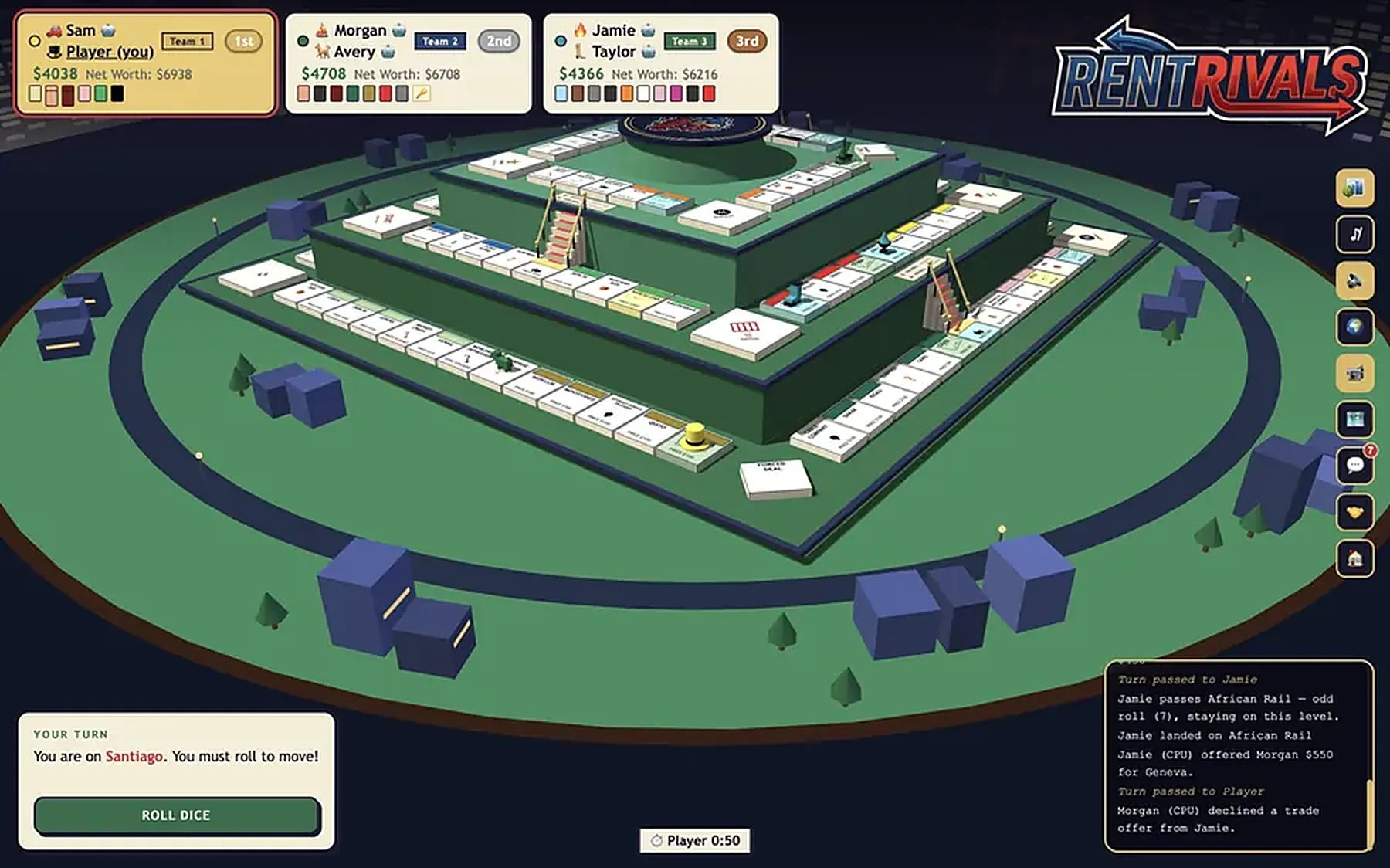
The three-track Extreme board changes the math. With the 56-space Ground Streets ring in play, traffic spreads across many more spaces, which makes the extra railroads and utilities better value — they're spread bets that don't rely on one lucky corridor. The world-city streets are cheap set-building material, but watch for the ring's special spaces: Land Grab and Forced Deal can move property without your consent, the $500 Cash Windfall and $300 Pay Day reward showing up, and the Worldwide Depression punishes everyone at once — keep that cash cushion bigger than you would on Classic. Learn where the staircases connect the tracks, because pieces flow through those junctions — property near a well-traveled connection collects more often than the map suggests.
On Standard and Extreme, the market events aren't random noise — they're opportunities if you see them coming. During a Market Crash, unowned property goes on fire-sale (down to $10 a deed at its worst), so it's the moment to buy everything in sight and complete sets on the cheap — but clear any mortgaged property before the crash's final round, or the bank seizes it. During Rent Inflation, all rents spike, so avoid landing on built-up rival sets and lean on jail if the board is a minefield — and if you're the landlord, this is when your houses pay double. A Worldwide Depression makes property $10 for six rounds while rents soar: grab deeds aggressively, but respect that anyone with a built set is now terrifying to land on.
In team games, partners share cash and property — so stop competing with your own teammate. Split roles: one partner buys everything they land on while the other banks the war chest and handles trades. Your combined portfolio completes sets twice as fast, and a shared wallet means one of you can always afford the auction the enemy team can't.
With 1-Minute Turns on, dithering is a strategy tax — the autopilot will play your turn its way, not yours. Decide your buy rules in advance ("I buy anything under $200 that touches a set") and use rivals' turns to plan yours. In round-limit games (25 or 50), remember the win condition is net worth, not survival: track the standings, and in the closing rounds treat every big rent corridor like a cliff edge — sometimes the winning move is the boring path, or a comfortable stay in jail while the clock runs out.
How you finish depends on the room. In a last-tycoon-standing game, the endgame is about pressure: build your best corridor into a wall of rent and herd the action toward it, while keeping enough cash that no single rent bill can knock you out. In a round-limit game the win condition is net worth, not survival — so track the standings and play the percentages in the closing rounds. If you're ahead, protect the lead: take the safe path, avoid the big rent cliffs, and a quiet stay in jail while the clock runs out can be the winning move. If you're behind, do the opposite — force confrontations and swing for a set that vaults you up the standings.
CPU rivals scale from Easy to Impossible, and they play differently enough to exploit. Easier bots buy loosely and trade generously — you can pry a set-completing deed out of them with a fair-looking bundle. The hardest bots are disciplined: they rarely hand you the piece you need, they bid auctions up to real value, and they build efficiently, so beating them means out-trading the humans at the table and not overpaying in the bidding wars they'll happily drag you into. Whatever the difficulty, the CPUs never get bored or tilt — so your edge is patience and a plan, not hoping they'll blunder.
Chat is a game mechanic. Friendly banter loosens trade partners; silence about your plans keeps prices low. If someone announces what they need, that information is worth money — at the auction, at the Trade Center, and in every offer they send you afterward.
With AI Chat on, the CPUs will actually talk terms: name the street you want, make a concrete offer, and lean on their needs — a rival one street short of a set pays a premium. When they say yes in chat, close it in the Trade Center before the board changes the math.
Play now · What’s Different · Minigames · How to Play · About · Contact · Privacy · Terms